
January 30, 2013
Collecting Big Data in Big Oceans
We have explored nearly every nook and cranny of the earth’s terrain. We have looked into space and examined galaxies billions of light years away. Yet what lies below the Earth’s waters had largely remained a mystery.
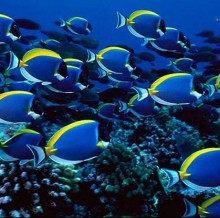 As such, the Census of Marine Life (CoML) was formed in 2000 to investigate the life in the oceans. The project was a $650 million effort that lasted ten year and involved 2700 scientists from over 80 nations. It resulted in 2600 scientific publications, over 6000 potential new species discoveries, and over 30 million species records, and counting.
While the CoML officially ended in 2010, the technological infrastructure that housed the information, known as the Ocean Biogeographic Information System, or OBIS, remains to prompt collaboration among marine biologists.
Niki Vermeulen of the Centre for the History of Science, Technology, and Medicine at the University of Manchester discussed this significant technological undertaking in a study looking to historically contextualize the CoML. From that historical standpoint, the CoML brought the discipline of marine biology into a similar open-access, collaborative, multi-team effort that is currently being experienced in genetics, proteomics, particle physics, and more.
The database itself, according to Vermeulen, consisted of information on living organisms drawn from taxonomic databases (OBIS drew from 12 of these at the time of the study) and geographical information from GIS systems that noted where species were found. The system was freely available on the internet, openly accessible to all participants in the CoML.
One of the goals of the CoML project, particularly the technological side of it, was to model ocean life’s future. That proved markedly difficult, according to Vermeulen, for various reasons. For one, it was difficult to obtain a proper picture of the past when faced with insufficient data. Further, the current models are unable to accommodate the vast amount of variables present among the diverse species that exist.
With that said, they were able to conclude that commercial fishing has cut into certain species’ population by almost 50 percent, a finding produced from studying trends from the 1950s to 1999 and then aggregating that with CoML data before and running it through OBIS. That realization was one of the first major big data-related findings from CoML and OBIS.
The experiments and discoveries studied in grade school are mostly dominated by lone researchers who stumble upon revelations. Rutherford prompted the discovery of the nucleus by shooting particles at gold foil to find one in ten thousand shooting right back; Watson and Crick found the shape of DNA using crystallography; Mendel developed genetics by examining pea pods. However, with most of the fundamentals known, the days where a single scientist changes the worldview with a single experiment are waning, and CoML’s effort represented one more example of this trend.
Further, while the oceans remain relatively unexplored and several species remain to be discovered, the focus has shifted to forming a large-scale understanding of marine life. The comprehensive OBIS database is a step in that direction.
Related Articles
Can Extragalactic Data Be Standardized?
Digging Mutants Out of Massive Data
A Different Einstein on Another Old Problem
Applications:
Research Analytics
Leading Solution Providers


Tabor Network


Sponsored Multimedia



Featured Events
-
AI & Big Data Expo North America 2024
 June 5 - June 6Santa Clara CA United States
 -
CDAO Canada Public Sector 2024
 June 18 - June 19
 -
AI Hardware & Edge AI Summit Europe
 June 18 - June 19London United Kingdom
 -
AI Hardware & Edge AI Summit 2024
 September 10 - September 12San Jose CA United States
 -
CDAO Government 2024
 September 18 - September 19Washington DC United States