
January 8, 2013
Proteomic Research Unfurls Cancer Conundrum
DNA sequencing has come a long way in the last ten years, with time and monetary costs plummeting over the last decade. It was thought that understanding the genetic code would provide clues to curing complex diseases like cancer. But as it turns out, those answers may instead lie in the much more complicated protein world.
 To tackle this research, oncologist David Agus teamed up with Danny Hillis, who counts entrepreneur, former VP of Disney, and pioneer of parallel processing among his descriptors. The two formed Applied Proteomics, a company designed to help map proteins within the human body and determine their interactions with cancerous cells and vice versa.
It is tough for computers—even those equipped to handle big data—to get their servers around proteins. Sequencing DNA is relatively easy because it operates on a similar foundation to computers—there are four nucleic acids repeating themselves in a random pattern much like information codes itself through ones and zeros.
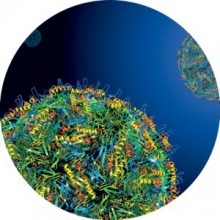
On the other hand, proteins throw a wrench in this model due to a process known as protein folding. In its mRNA form, each protein exists in an identically shaped strand, just as two unique pieces of DNA would. But when that mRNA is translated into amino acids, the protein folds in on itself to create a particular three-dimensional shape that is essential to the protein’s function. As a result, two proteins can have two entirely different shape-dependent functions even if they are chemically identical.
Agus’s goal was to, though a sample of urine or blood, create a model of the proteome throughout the human body. However, the complexity of proteins made it nigh impossible, akin to trying to find a person on the ground from an airplane.
Danny Hillis came to work with Agus through an unexpected intermediary in Al Gore. Gore visited the lab where Agus was working on proteomics. According to Agus, Gore’s comment was simply, “This really would benefit from an engineer’s way of thinking attached to it.”
After a phone call from Agus and a little nudging from Gore, Hillis was on board. After two years of research under Applied Minds, the two developed a testing method that could be replicated precisely.
The lynchpin lies in the ability to mass produce blood test results, where anomalies can be found and validated more thoroughly over a larger sample size. However, the sample size itself, consisting of several tests performed to cover all of the proteins across a human body, is cumbersome.
“We are going to get overwhelmed by this enormous amount of genomic information,” says Robert Austin, a Princeton University physicist. “It’s sort of like high-energy physics before the quark model came about,” he says. “We lack a ‘theory of cancer’ right now.”
Physicist John Quackenbush, who was plucked from Fermilab to join the Human Genome Project, explained that simply accruing large amounts of data is not necessarily the recipe. “I can tell you from my experience that sometimes coming in like that you can be a little naive in thinking that having a lot of data will suddenly solve all of your problems,” Quackenbush said. “Big data is not a panacea.”
With that said, the goal is to develop the analytics and processing power that will be able to pick out the cancerous signal from the normal protein noise. With that, doctors could hypothetically begin to individually tailor cancer treatments based on a patient’s protein analysis. Further, anomalous proteins could be identified in advance of tumors and preventative measures could be taken.
Before anyone gets ahead of themselves, however, Agus and Hillis’s research is still just starting to uncover these techniques and understanding the ensuing data. Progress, according to Agus, is dependent on the co-operation of researchers like Austin—a physicist working on a tumor interaction model—who span the sciences. It will also be dependent on how well the ensuing swaths of information can be applied.
Related Articles
Breaching the Big Data Barrier in Healthcare
Adding Autonomy to Personalized Medicine
Technologies:
Systems
Sectors:
Healthcare
Leading Solution Providers


Tabor Network


Sponsored Multimedia



Featured Events
-
AI & Big Data Expo North America 2024
 June 5 - June 6Santa Clara CA United States
 -
AI Hardware & Edge AI Summit Europe
 June 18 - June 19London United Kingdom
 -
AI Hardware & Edge AI Summit 2024
 September 10 - September 12San Jose CA United States
 -
CDAO Government 2024
 September 18 - September 19Washington DC United States